Apple - Data Product Design
Designing to unlock data and scale collaboration
OVERVIEW
Designing internal and partner platforms to unlock data and improve decision-making at scale.
At Apple, I worked on two key initiatives: Myriad, an internal reporting platform for leadership, and Partner Gateway, a platform designed to support Apple’s partner ecosystem.
Both projects focused on simplifying complex data and workflows, enabling teams and partners to access, understand, and act on information more effectively.
MY ROLE
Lead Product Designer across both projects.
Owned the design end-to-end, from strategy to delivery, across Myriad and Partner Gateway.
Led alignment with stakeholders while staying hands-on on key flows and systems.
2022-2023
What we did for Apple.
Working in Designit, I had the opportunity to work and visit Apple in San Francisco. This is what we did…
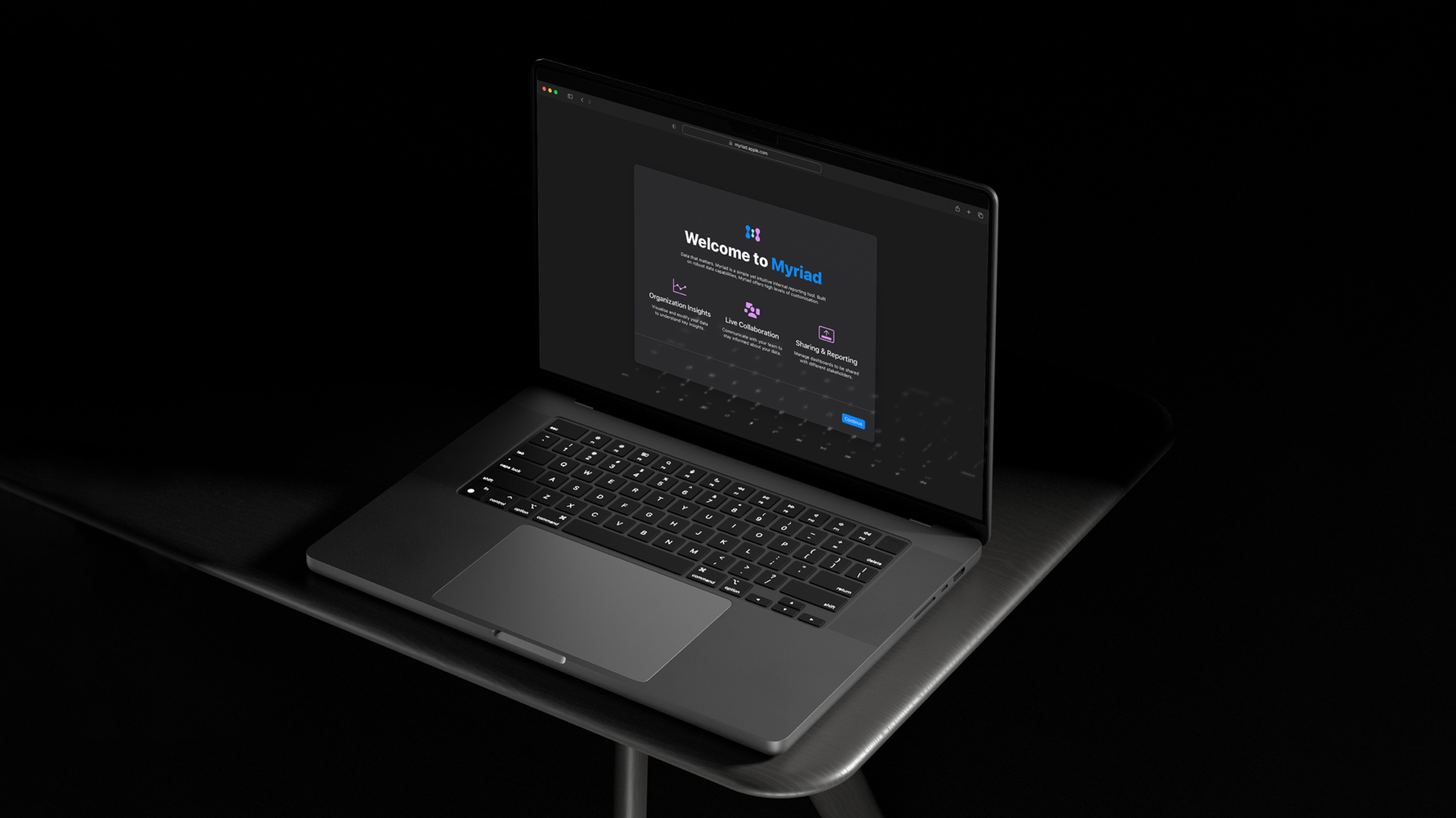
Myriad.
Unlock data potential.
Apple needed a more flexible and scalable way to create and consume management reporting. Existing tools required manual work, were difficult to customise, and didn’t support the level of flexibility teams needed to explore and understand data effectively.
THE PROBLEM
GOAL
Teams across Apple were spending too much time creating and maintaining reports, instead of using them to make decisions.
Reporting workflows were fragmented, data was hard to customise, and insights were often lost in static dashboards.
At the leadership level, there was a clear need to access accurate, meaningful information quickly—without relying on manual processes or multiple tools.
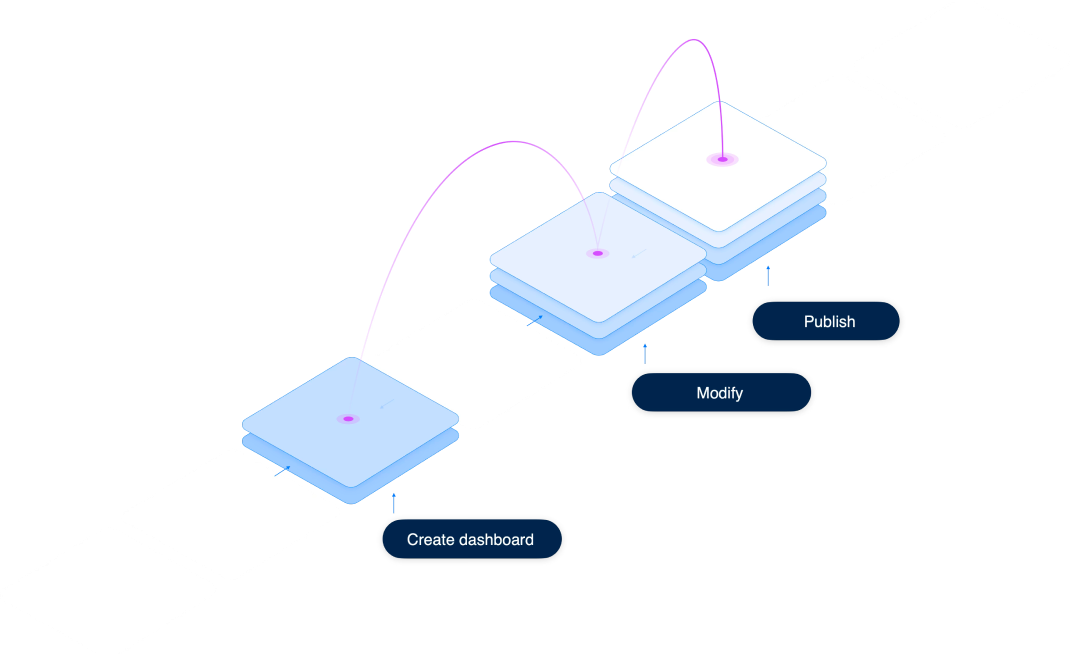
Design a system that allows teams to create, customise, and interact with data in a flexible and intuitive way.
The goal wasn’t to produce better reports, but to replace static presentations with a real-time, interactive tool—enabling faster, more informed decisions across the organisation.
IMPACT
APPROACH
We approached Myriad as a product rather than a reporting tool.
I led the definition of the product vision and core experience, working closely with stakeholders to understand real workflows and constraints.
We focused on a few key principles:
Flexibility over rigid structures: Users needed to adapt dashboards to their needs, not the other way around.
Start from something, not from scratch: We introduced templates and reusable components to speed up creation and reduce friction.
Modular and editable experiences: Instead of linear flows, we designed a system where users could create, edit, and iterate continuously.
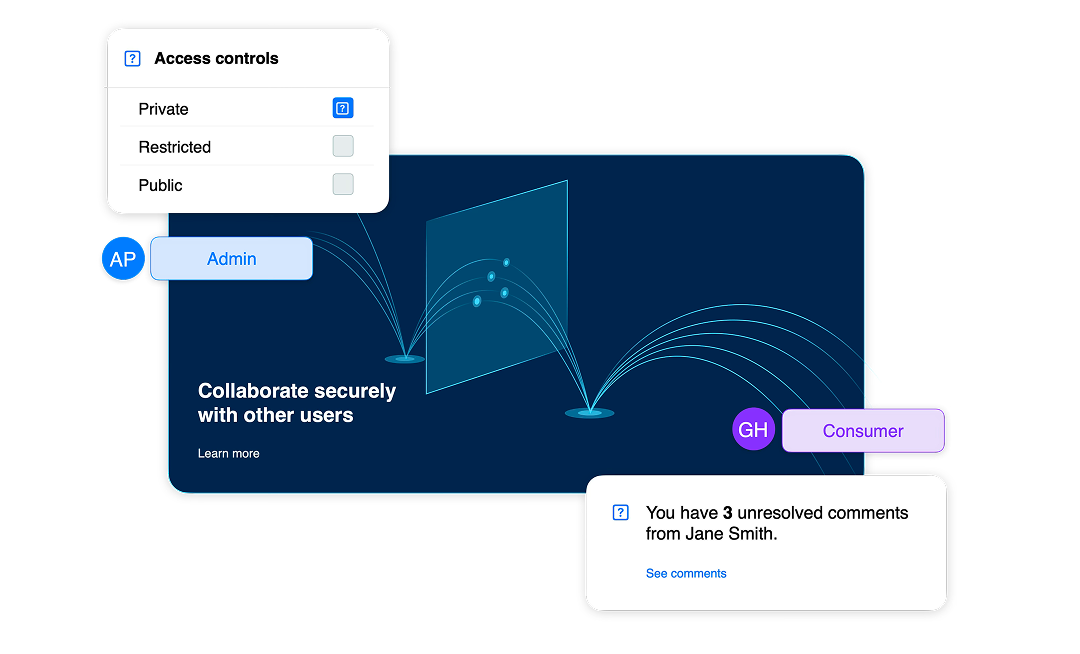
Data with context: We enabled annotations, collaboration, and shared understanding around the data—not just numbers.
I was involved across the full process, from early strategy and concept definition to hands-on design and prototyping. I also met the team in SF, California and I drove several workshops to understand the problems and get a clear picture of the needs.
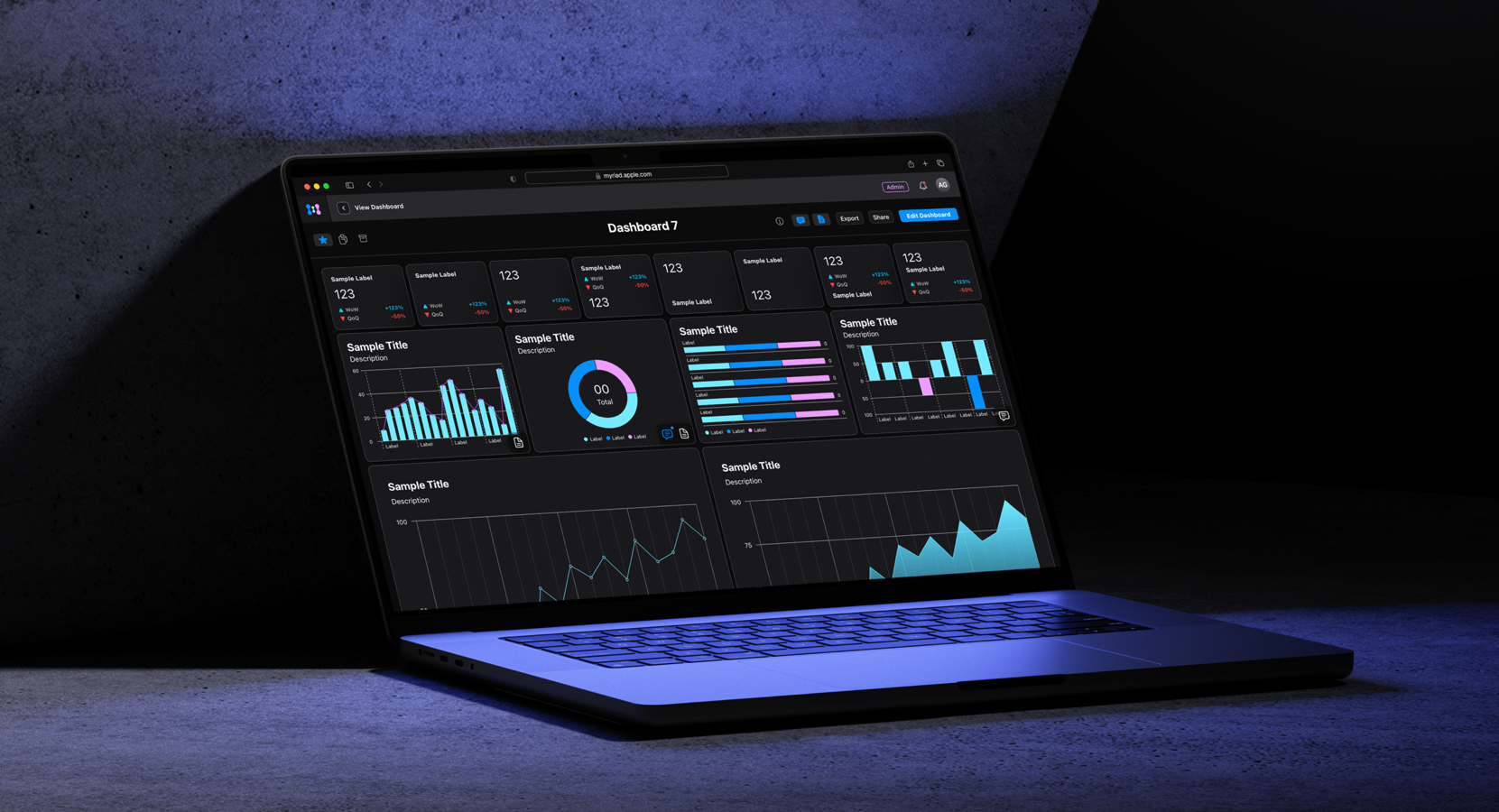
Myriad shifted reporting from a manual, fragmented process to a more flexible and scalable system.
It reduced time spent creating reports, improved access to meaningful insights, and enabled teams to focus on decision-making rather than data preparation.
BRAND & PRODUCT DESIGN
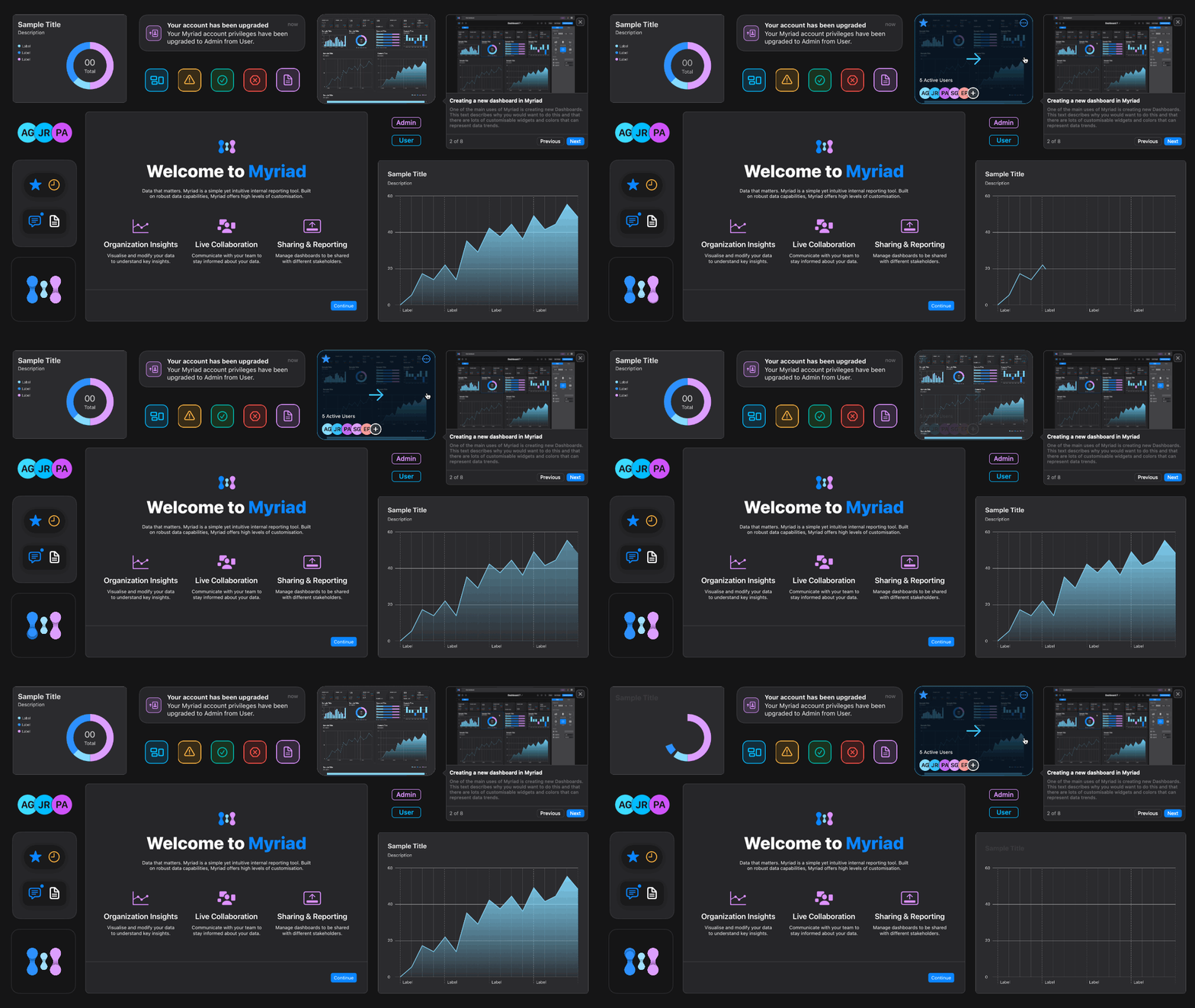
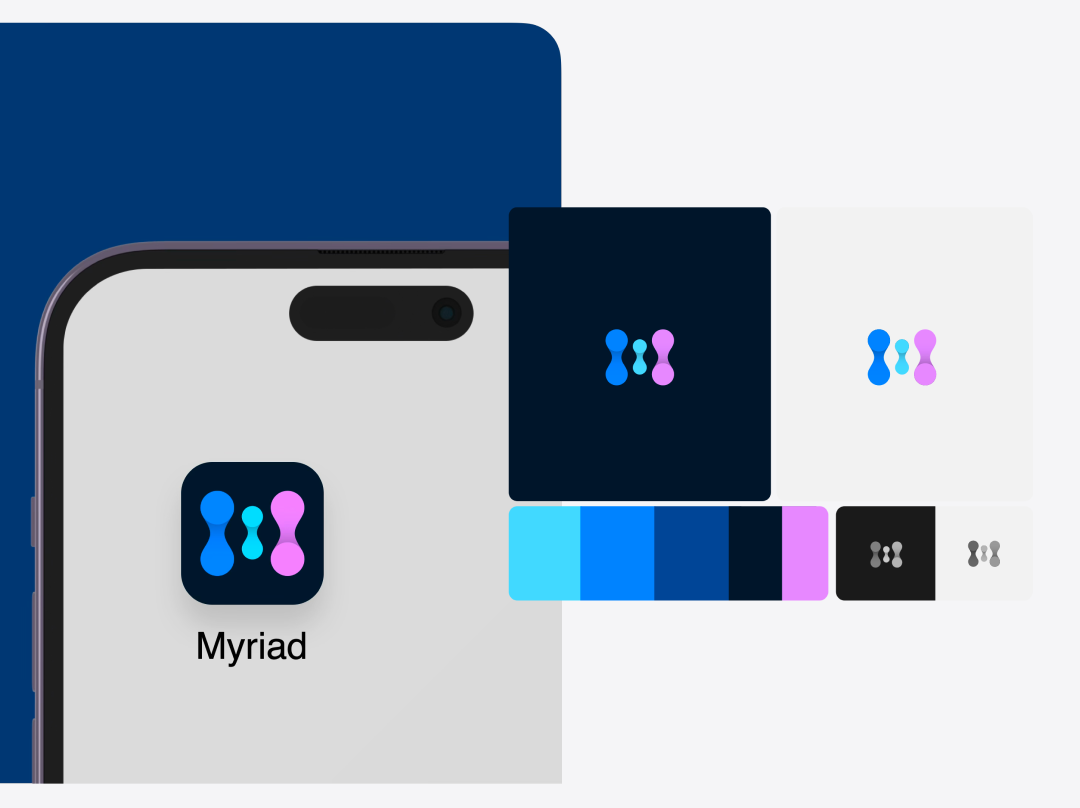
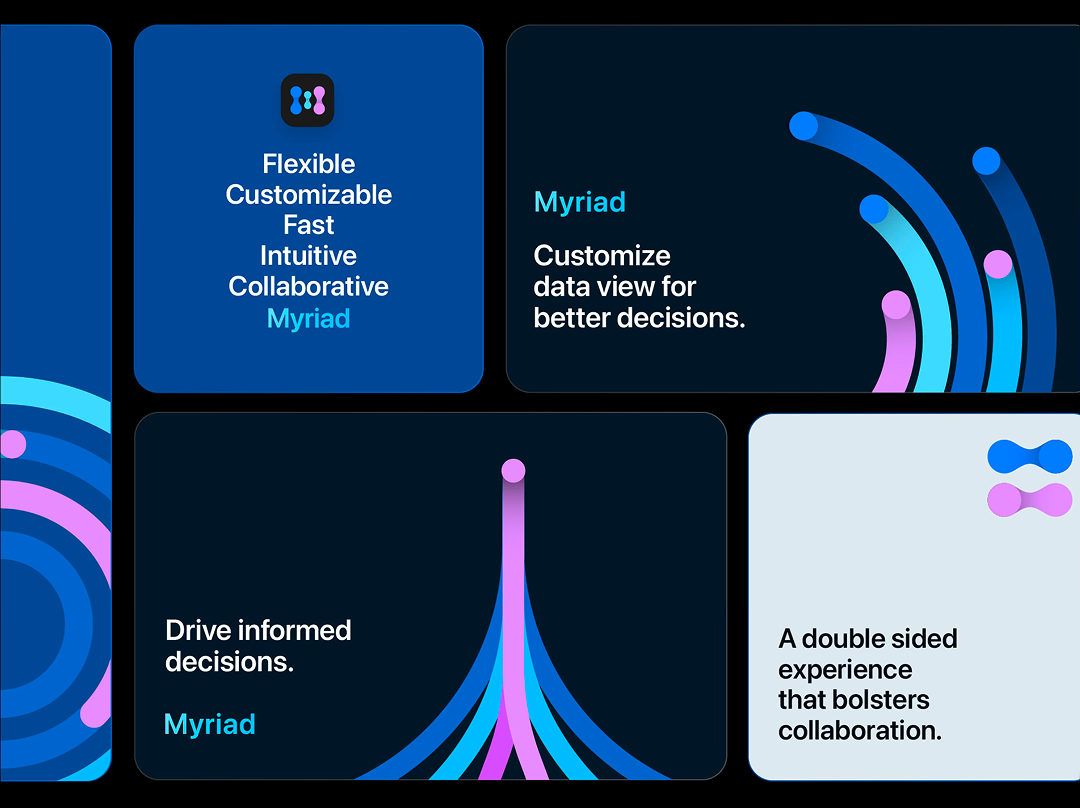
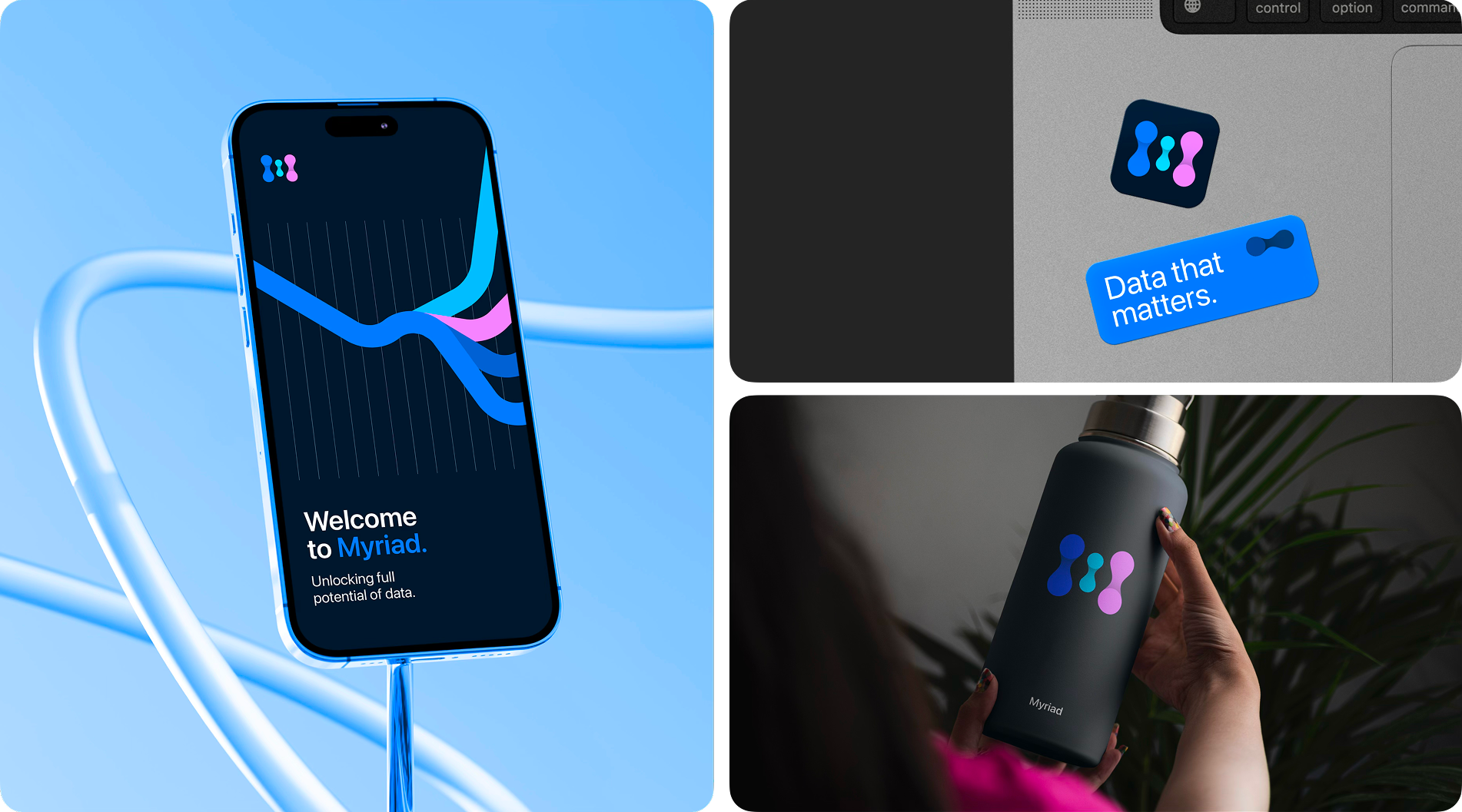
Beyond the product experience, we also designed the full identity of Myriad—from naming to visual system.
The goal was to create a product that felt native to Apple while still expressing flexibility and adaptability in how data is represented.
This included defining visual principles, colour systems, and interaction patterns that could scale across different types of dashboards and use cases.
WHY IT MATTERED
Myriad laid the foundation for a more scalable and efficient approach to internal reporting.
It reduced reliance on manual processes, enabled faster access to insights, and created a flexible system that could evolve with different teams and business needs.
It also shifted the focus from generating reports to actually understanding and acting on data.
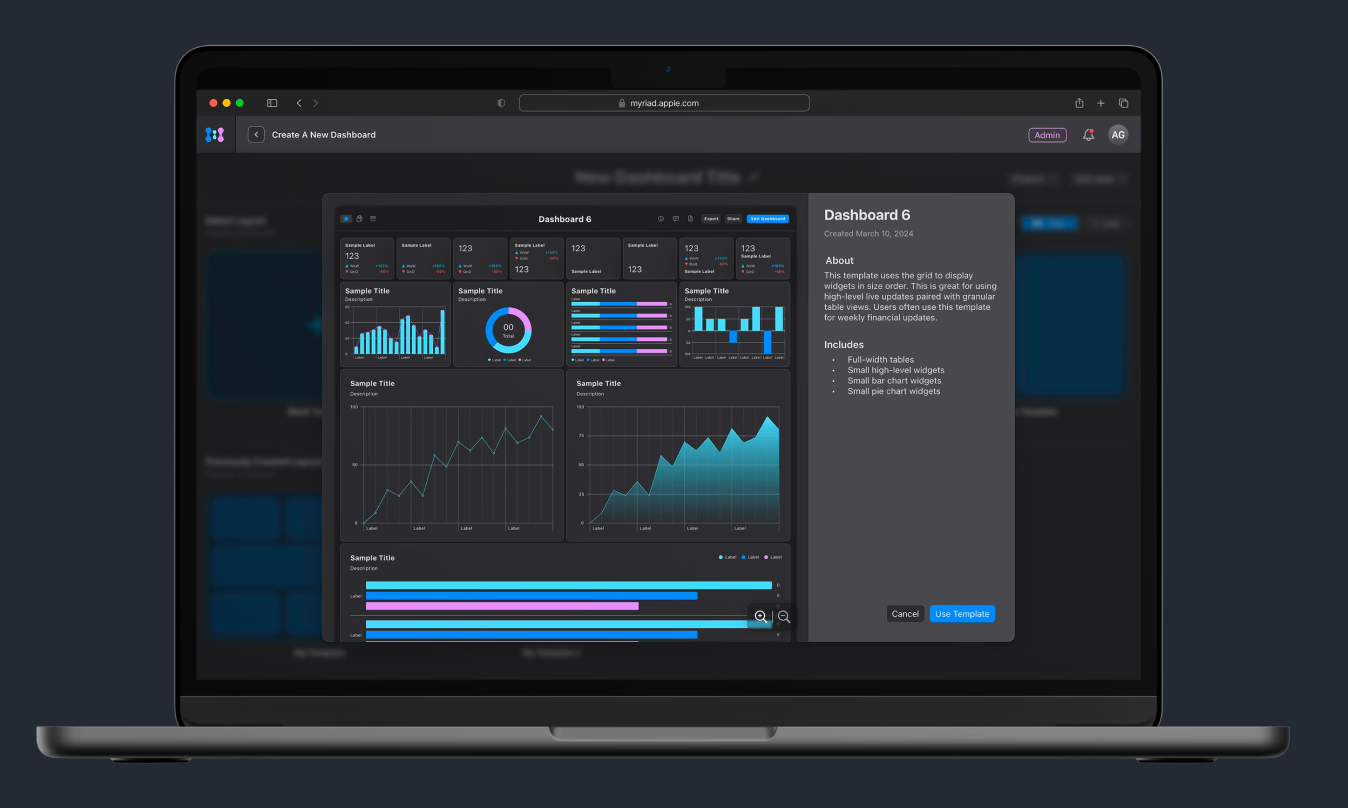
Using templates to create new dashboards in Myriad. Each template was tailored to specific departments, addressing their unique needs and workflows.
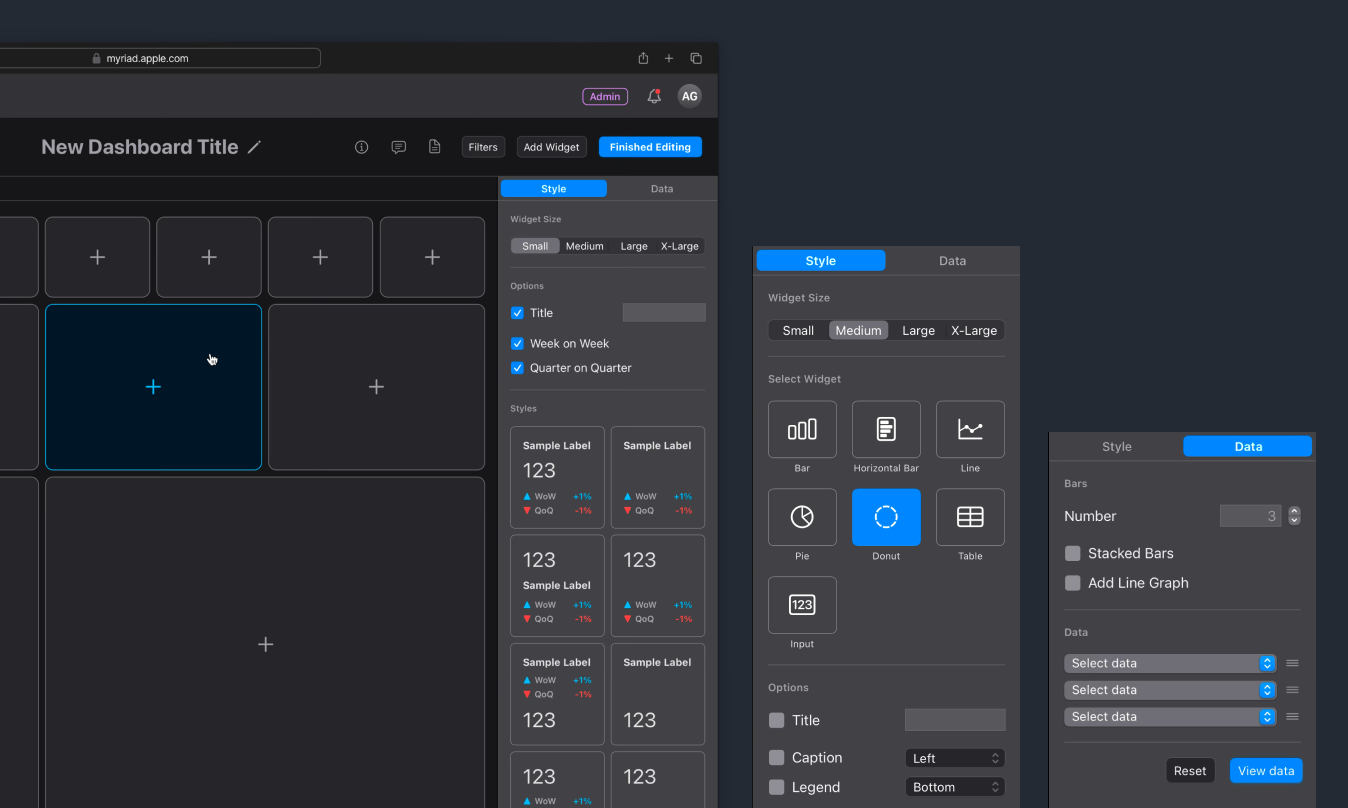
Aligning with familiar Apple tools like Keynote to create a more intuitive experience and ensure consistency with Apple’s design standards.
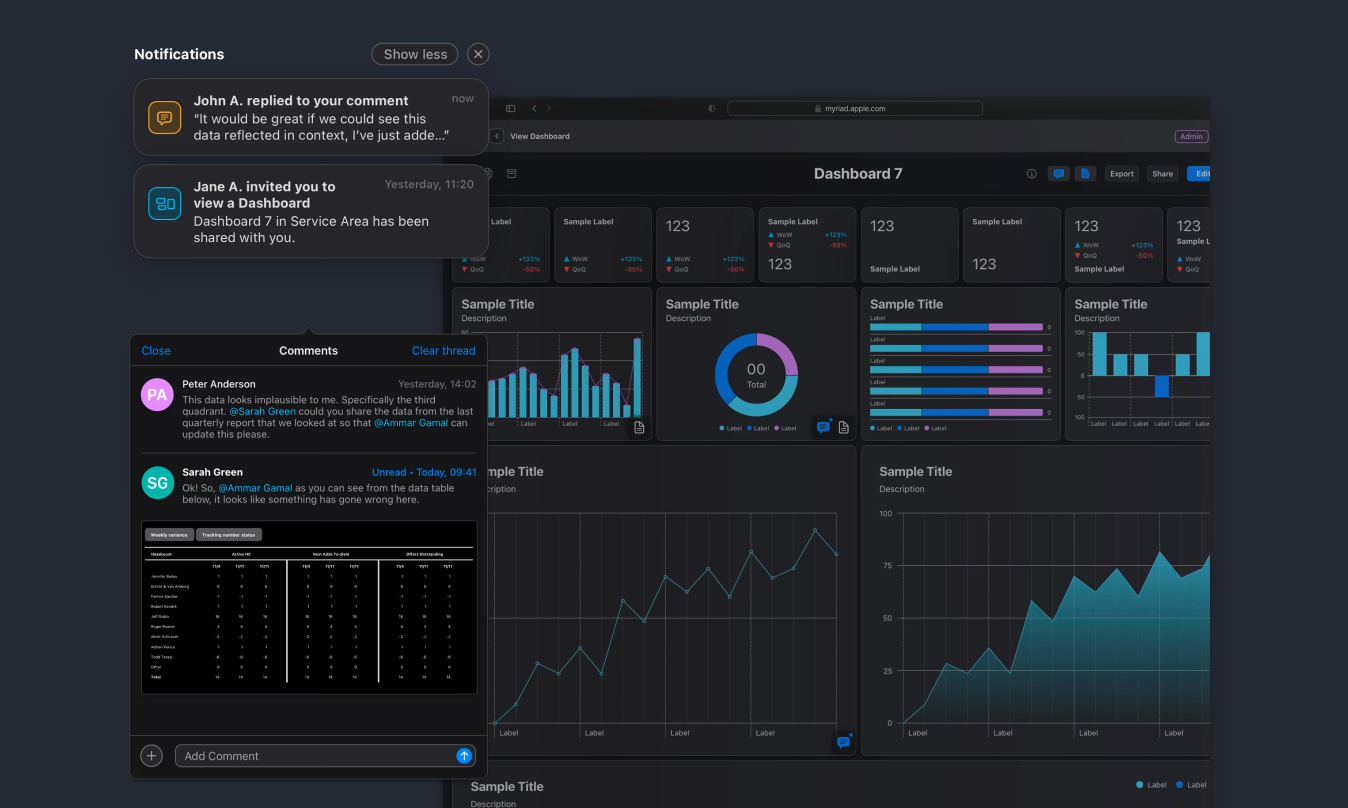
Enabling real-time comments and notifications to improve collaboration across teams and capture feedback instantly.
CHALLENGES & LEARNINGS
Working at Apple required balancing strong design opinions with complex organisational realities.
One of the main challenges was designing systems that needed to scale across multiple teams, each with different needs and expectations. Alignment and clarity became as important as the design itself.
I also learned the importance of designing flexible systems rather than fixed solutions. Products like Myriad needed to adapt over time, which required thinking in terms of frameworks, not just screens.
Another key learning was how to navigate stakeholder-heavy environments, making decisions while incorporating feedback without losing direction.
Overall, this experience reinforced the importance of structure, clarity, and scalability when designing complex enterprise products.